
Leash reactivity ranks among the most common behavior problems we see at KC Dawgz, and it affects dogs of every age, from young puppies through the senior years. A tight leash, constant barking, and locked-in fixation on another dog or a passing car can turn a short walk into an event you dread. The good news is that this behavior responds well to a thoughtful training plan.
What Reactive Behavior Looks Like On A Walk
Common Signs We Watch For
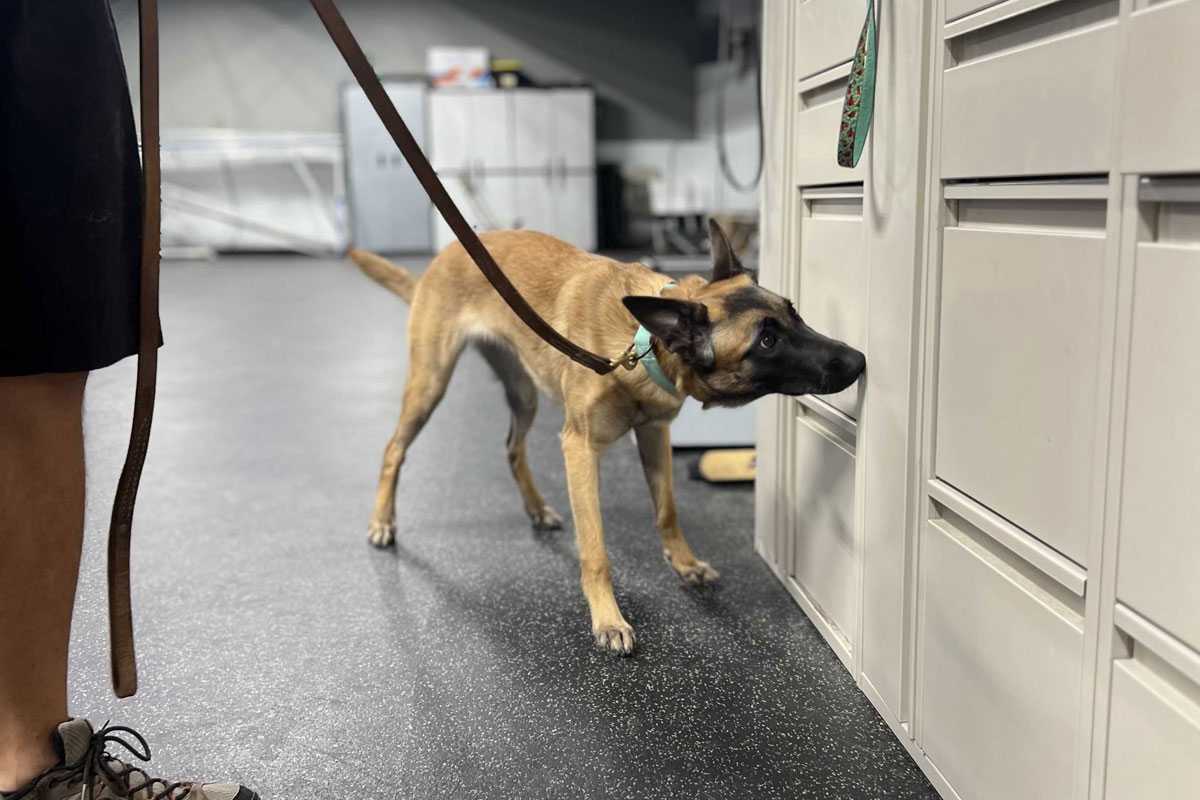
Most owners describe a similar picture. The dog hits the end of the leash, tension builds through the line, and the dog locks onto whatever set them off.
- Barking at the trigger
- Fixating and showing overinterest in one target
- Pulling hard enough that the leash stays tight
- Losing all ability to hear you
Triggers Vary From Dog To Dog
Some dogs react to other dogs. Others react to people, and plenty react to cars. Much of this comes down to your dog’s past experience, or the lack of it.
Key Takeaway: Reactivity is not one behavior with one cause. Two dogs pulling and barking on the same street can need two completely different plans.
The Different Types of Reactivity We See
Fear, Genetics, and Over Excitement
Reactivity is not always aggression-based. In our experience, it comes from a few distinct places:
- Genetic aggression that expresses itself as reactive behavior
- Fear of an unfamiliar person, dog, or object
- Hypersocial reactivity, where the dog is simply too excited to get closer
Each type is managed differently, which is why a one-size template rarely works.
Why Suppression Backfires
We never simply correct a dog for feeling the way they feel. Suppressing the outburst hides the signal and leaves the underlying emotion untouched. Our goal is to change how your dog feels about the trigger, not to silence the response.
Need expert help with leash reactivity? Contact KC Dawgz for a free consultation.
How Our Trainers Address Leash Reactivity
Finding Triggers and Thresholds
We start by identifying your dog’s individual triggers. Then we find the threshold, meaning the distance or intensity at which your dog can still focus on you. That point becomes the foundation for everything that follows.
Counterconditioning and Obedience
From there, the plan depends on the dog. Sometimes the answer is counterconditioning. Other times it means instilling proper obedience so your dog has a clear job to do when a trigger appears. Often it is a blend of both.
Pro Tip: Track where your dog first notices a trigger versus where they react. That gap tells your trainer exactly where to begin.
Why Experience Matters When You Hire a Trainer
What to Ask Before You Commit
Ask any trainer to explain the categories of reactivity and how they manage each one. A qualified professional should answer without hesitation and should meet your dog where they are rather than forcing a preset program.
Solutions for Leash Reactivity That Fit Daily Life
A plan only works if you can run it on a Tuesday evening in your own neighborhood. We build protocols around your routine, your schedule, and the streets you actually walk.
Key Takeaway: The real value of a professional is a plan matched to your specific dog and your specific life.
Ready for Calmer Walks?
When to Seek Professional Help
Reach out as soon as walks become unpredictable. Early intervention gives us more room to work below your dog’s threshold, and it keeps small patterns from hardening into daily habits. Puppies and seniors both respond well, so age is never a reason to wait it out.
If your dog’s reactivity isn’t improving with practice at home, our reactive dog training in Kansas City offers 3-, 4- and 6-week programs, and every case starts with a free evaluation.
Getting Started with KC Dawgz
Our first step is a full assessment of your dog’s triggers, threshold, and the type of reactivity involved. From there, we map out a plan you can actually run on your own walks. You do not have to manage this alone. Schedule your free consultation with KC Dawgz and let our experienced team build a training plan that finally resolves your dog’s leash reactivity.