
A crate is one of the most effective tools for potty training a new puppy and keeping them safe when you can’t watch them. Learning how to crate train a puppy takes a slow, positive introduction and a steady daily routine.
Why Crate Training Works
A crate gives your puppy a quiet space of their own. Many dogs like small, enclosed spaces to rest in, and a predictable spot helps them settle faster.
Crate training a puppy also helps you:
- Speed up potty training. Most puppies try not to soil the area where they sleep.
- Prevent damage and danger. No chewed cords or swallowed socks while you shower.
- Make travel and vet visits easier. A crate-trained dog often handles new places with less stress.
Setting Up the Crate
Pick the Right Size
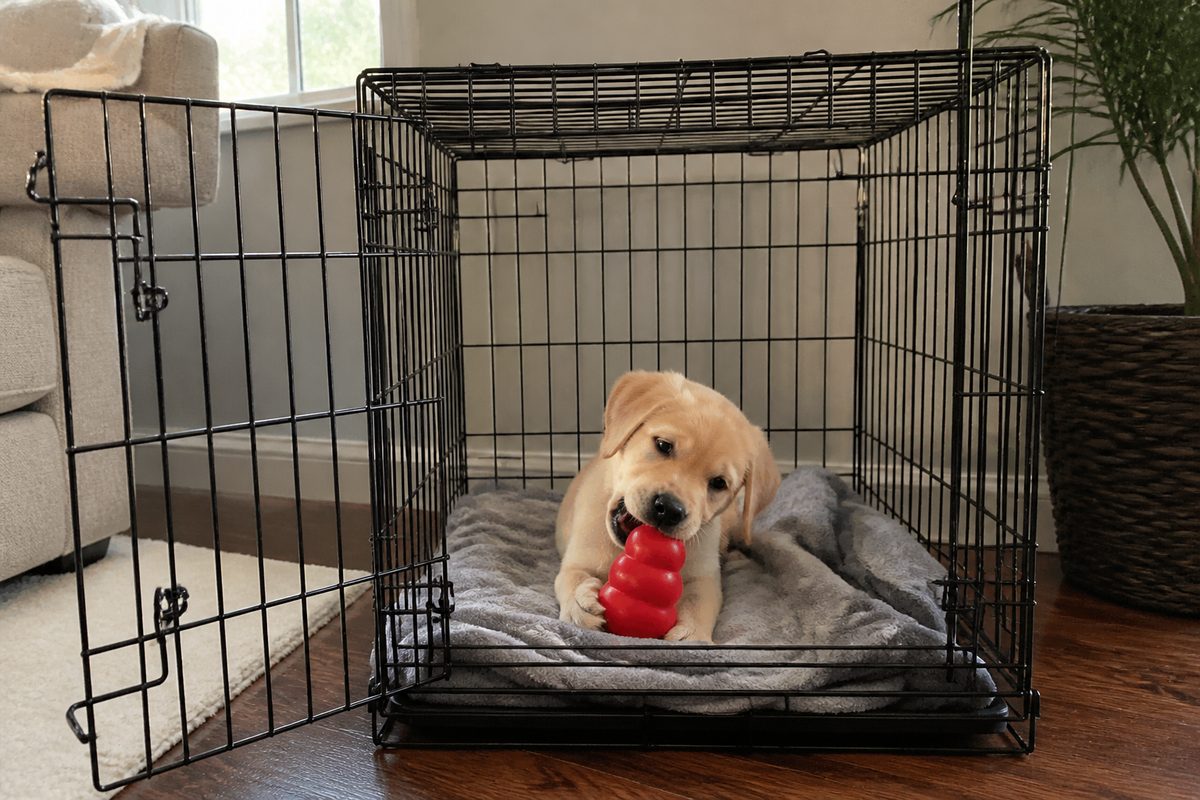
Your puppy should be able to stand up, turn around, and lie down comfortably. Extra space gives them room to potty in one corner and sleep in another.
Raising a large breed? Buy a crate sized for their adult size and use a divider panel. Move the divider back as your puppy grows. Our guide on what size kennel to use covers fit in more detail.
Choose the Right Spot
Place the crate where your family spends time, such as the living room or kitchen. Keep it away from heat vents, drafts, and direct sun.
Add one durable chew toy that can’t be torn into small pieces. Skip thick bedding for now if your puppy shreds blankets or has accidents.
Pro Tip: Leave the crate door open during the day. When your puppy wanders in to nap on their own, quietly drop a treat inside.
How to Crate Train a Puppy in 7 Steps
Work through these steps in order. Some puppies move through them in days, and others need several weeks. Both are normal.
- Make the crate a treat zone. Toss treats just inside the door, then farther back. Let your puppy go in and out freely.
- Serve every meal in the crate. Start with the bowl at the entrance and slide it toward the back over a few days.
- Add a cue word. Say “Kennel up” as your puppy steps in, then reward. Soon they will go in when asked.
- Close the door for a few seconds. Stay right beside the crate. Open it before your puppy fusses, then reward calm behavior.
- Build to 30 minutes with you nearby. Give your puppy a stuffed Kong or long-lasting chew and stay in the same room.
- Leave the room, then the house. Start with two-minute absences. Keep departures and returns quiet and boring.
- Crate overnight. Once your puppy naps calmly in the crate during the day, they are ready for nights.
Key Takeaway: Move on only when your puppy stays relaxed at the current step for a few sessions in a row. Rushing is one of the most common reasons crate training stalls.
Nights and Time Limits
How to Crate Train a Puppy at Night
Expect some crying the first two or three nights. Keep the crate beside your bed so your puppy can hear and smell you. A partly covered crate and a white noise machine help many puppies settle.
Young puppies need a potty break overnight. Carry them outside, wait for them to go, and put them straight back in the crate with no play and very little talking.
How Long Can a Puppy Stay in a Crate?
Use these general daytime limits as a starting point:
| Puppy Age | Max Daytime Crate Time |
| 8 to 10 weeks | 30 to 60 minutes |
| 11 to 14 weeks | 1 to 3 hours |
| 15 to 16 weeks | 3 to 4 hours |
| 17 weeks to 6 months | Up to 4 hours |
If you work long days, a midday dog walker or puppy sitter can break up crate time. Once your puppy is 4 months old, our Day Training program is another way to cut down crate time on workdays.
Sample Puppy Crate Training Schedule
Here is a sample day for a puppy 8 to 12 weeks old. Adjust the times to fit your routine. Naps can run a bit past the limits above because sleeping puppies hold it longer, so take your puppy out as soon as they wake.
| Time | Activity |
| 6:30 AM | Potty break |
| 7:00 AM | Breakfast in the crate, then potty |
| 7:30 AM | Play and a short training session |
| 8:30 AM | Nap in the crate |
| 10:00 AM | Potty, then play |
| 12:00 PM | Lunch in the crate, potty, nap |
| 1:30 PM | Potty and play |
| 3:00 PM | Nap in the crate |
| 4:30 PM | Potty and a short walk |
| 5:30 PM | Dinner in the crate, then potty |
| 6:00 PM | Family time with short crate naps |
| 10:00 PM | Final potty, then bed in the crate |
| 2:00 AM | Quiet potty break |
Pro Tip: Take your puppy out right after they wake up, eat, or play. Those three moments are when accidents are most likely. For the potty side of the routine, see our puppy potty training schedule and how long house training takes.
Fixing Common Crate Training Problems
Whining or Crying
First, rule out a real need. If the last potty break was a while ago, take your puppy out calmly and return them to the crate. If their needs are met, wait for a few seconds of quiet before you open the door. Opening it mid-cry teaches them that crying works.
Accidents in the Crate
Often the crate is too big or your puppy is in it too long. Add a divider, shorten crate time, and clean with an enzyme cleaner. Frequent accidents can also signal a urinary infection, so check with your vet.
Refusing to Go In or Panicking
Go back a step or two. Use higher-value treats like small pieces of plain, cooked chicken, and keep feeding meals in the crate.
Panic, heavy drooling, or injuries from escape attempts can point to separation anxiety, which needs a different plan. If your puppy is getting hurt, stop crating and talk to your vet. Our behavior modification team can also help.
Need expert help with crate training? Contact KC Dawgz for a free evaluation at our Overland Park, Olathe, or Gladstone location. Book your free evaluation here.
Crate Training Mistakes to Avoid
- Using the crate as punishment. It should always feel like a safe place.
- Leaving your puppy in too long. Stick to the time limits above.
- Making a big deal of goodbyes. Calm exits lead to calm puppies.
- Leaving a collar on in the crate. Tags and buckles can catch on wire.
- Skipping exercise. A tired puppy settles in the crate much faster than a restless one.
Crate Training FAQs
How long does it take to crate train a puppy?
Most puppies get comfortable in a few days to a few weeks. Younger puppies and puppies with a bad crate experience usually need longer, so let your puppy’s behavior set the pace.
Should I cover my puppy’s crate?
A light blanket over the top and sides helps many puppies settle, especially at night. Leave the front open for airflow, and take the cover off if your puppy pulls it in and chews it.
Should I put a potty pad in the crate?
Usually not. A pad tells your puppy it’s fine to go where they sleep, which works against the main reason a crate helps with potty training.
How KC Dawgz Helps With Crate Training
“Kennel” is one of the extra commands families can choose in our Day Training and Board & Train programs, so your dog learns to go into the crate on cue. Puppies under 3 months can start with in-home puppy lessons, and our private lessons work one-on-one with dogs who already fight the crate.
Give Your Puppy the Right Start
Crate training can take days or weeks, depending on your puppy’s age, temperament, and past experiences. Keep sessions short, reward calm behavior, and make the crate a happy place every day. Once your puppy settles in, you can move on to skills like jumping on guests and leash pulling.
Want structured support? Our Puppy Training classes help you build good habits early. Call us or book a free evaluation, and we’ll walk you through how to crate train a puppy with your family’s routine in mind.