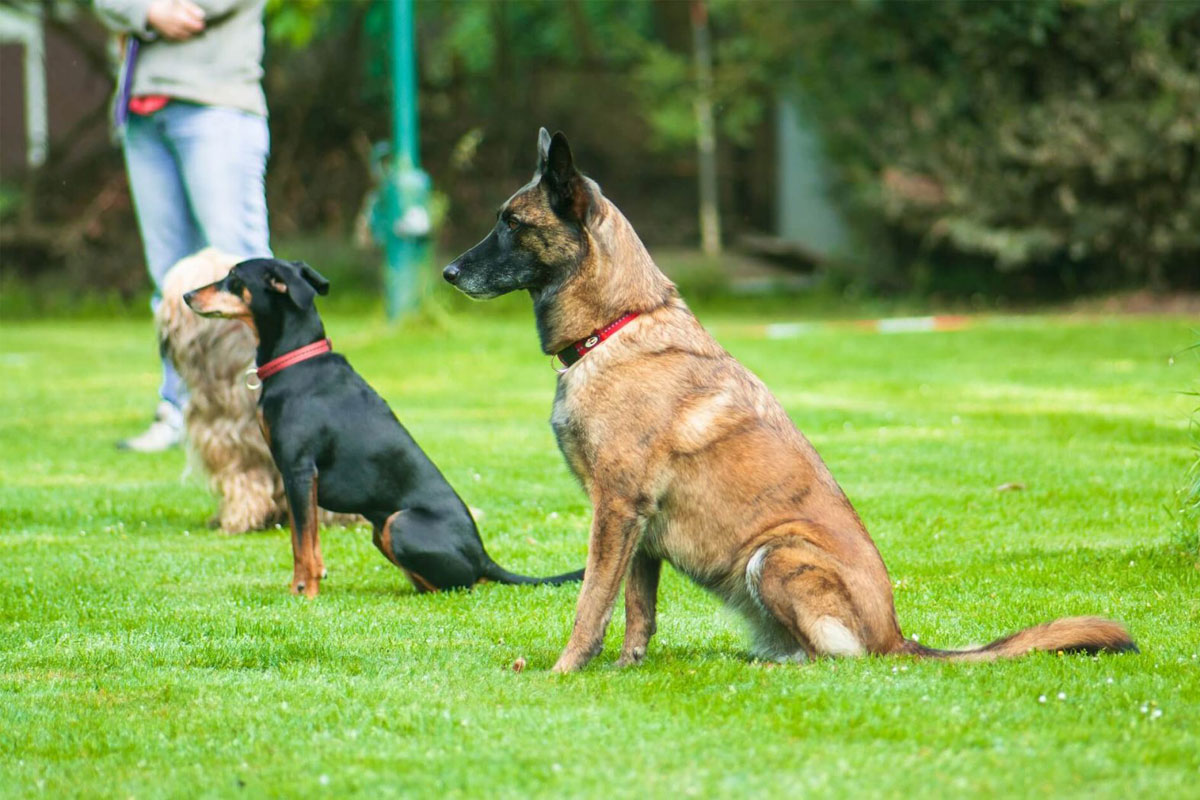
Your dog just finished a long walk and is already bouncing off the couch. That is one of the most common complaints we hear from Kansas City dog owners. More miles rarely fix it, because a high-energy dog needs a job for its brain as well as its legs.
Agility training for high-energy dogs gives them that job. Below, our trainers explain how it works, which dogs it suits, and how to get started safely.
Why Walks Alone Don’t Settle a High-Energy Dog
Energy and Drive are Two Different Things
Many breeds were developed to herd, guard, retrieve, or hunt for hours. That instinct, called drive, needs an outlet that involves thinking and decision-making. A walk around the block gives the brain very little to do.
More Running Can Build a Fitter Dog
Owners often respond to a restless dog with longer runs or more fetch. Over time, the dog’s stamina grows, and it needs even more exercise to feel tired. We see this fitness trap often with Border Collies, Australian Shepherds, German Shepherds, Labs, Dobermans, and Goldendoodles.
Key Takeaway: If your dog is still restless after a long walk, the missing piece is usually mental work.
The Benefits of Agility Training for High-Energy Dogs
Agility asks a dog to run, jump, and weave while following its handler, which works the body and brain at the same time.
Physical Benefits
- Burns energy in short bursts. Sprints between obstacles tire a dog faster than steady walking.
- Builds strength and joint stability. Climbing the A-frame and dog walk develops the rear legs and core.
- Improves coordination. Jumps and weave poles teach footwork, balance, and body awareness.
- Supports a healthy weight. Regular sessions help active dogs stay lean.
Mental Benefits
Every obstacle is a small puzzle. Your dog has to read your cues, judge distance, and decide where to place its feet. That focused effort is tiring in a healthy way, and it cuts down on boredom behaviors such as chewing, digging, and nuisance barking.
Confidence and a Stronger Bond
Mastering a wobbly teeter or a dark tunnel builds confidence, especially in timid dogs. Working as a team also sharpens communication between you and your dog. One client told us her 1-year-old Lab gained confidence on our agility course and is moving on to Agility 201 next.
Pro Tip: In our experience, a short, focused agility session often settles a dog better than a long game of fetch. Keep sessions brief so the quality of work stays high.
How Agility Teaches Your Dog an “Off Switch”
Agility trains a dog to work at full speed and then calm down on cue.
Self-Control Is Built Into Every Course
- Start-line stays: Your dog waits in position until you give the release word.
- Contact zones: Your dog must touch the painted zone at the bottom of the A-frame or dog walk before moving on.
- Pause table: Your dog holds a down while excitement is at its peak.
The Skills Carry Over at Home
A dog that can hold a stay with a tunnel nearby can also wait politely at the front door. Owners tell us they see calmer greetings, better mealtime manners, and improved loose leash walking. This blend of structure and fun reflects our balanced training philosophy.
Need help with a dog who never seems to settle? Contact KC Dawgz for a free evaluation, and our team will recommend the right starting point.
Is Your Dog Ready for Agility?
Age and Health
We recommend waiting until your dog is at least 1 year old before starting agility, so the joints are more fully developed. Large and giant breeds can take longer to finish growing. Check with your veterinarian first, especially if your dog has a history of joint problems.
Basic Obedience Comes First
Our agility class is designed for dogs that already know sit, stay, down, and come through obedience training. Your dog should also be able to focus on you around other dogs. If those skills are shaky, our puppy training, private training, and day training programs build that foundation.
Dog agility training can be a healthy outlet for reactive dogs too. Serious reactivity is best addressed through behavior modification first.
Key Takeaway: A vet check and solid obedience skills make agility safer and far more rewarding for you and your dog.
Agility Games You Can Try at Home
- Pole walk: Lay three or four broomsticks flat on the ground about one stride apart, and walk your dog slowly over them.
- Blanket tunnel: Drape a blanket over two chairs and reward your dog for walking through.
- Cone wrap: Teach your dog to circle a cone or bucket and come back to you for a treat.
- Start-line wait: Ask for a sit, toss a treat a few feet ahead, and release your dog only when you say the word.
Keep home sessions under 10 minutes and always use a non-slip surface.
Agility Safety Tips for Kansas City Dogs
- Warm up first. A few minutes of walking and easy trotting prepare muscles and joints.
- Watch for over-arousal. Frantic barking, nipping, and ignoring cues mean it is time for a break.
- Pick good footing. Avoid slick floors and hard concrete.
- Plan around the weather. Kansas City summers bring heat and humidity, and winters bring ice. Train early on summer mornings and move indoors when footing is poor.
Pro Tip: High-drive dogs rarely quit on their own. Ending the session while your dog still wants more keeps training safe and keeps motivation high.
Frequently Asked Questions
How Often Should a High-Energy Dog Do Agility?
Two or three short sessions per week work well for most dogs. Pair them with daily obedience practice and enrichment such as sniff walks or puzzle feeders.
Does Agility Make a Dog More Hyper?
Structured agility helps a dog learn to settle. Stays, contacts, and rewards for calm behavior teach your dog to regulate excitement. Unstructured jumping and chasing can raise arousal, which is why guided instruction matters.
Where Can I Find Agility Training for High-Energy Dogs in Kansas City?
Our Companionship Agility classes meet at our Overland Park academy, and no competition experience is needed. Agility 101 covers attention work, handler cues, distraction training, and beginning obstacles. Agility 201 builds on those skills and includes off-leash work. We also offer Intro to Scent Work, another great outlet for busy minds.
Give Your Dog a Job It Loves
Restless behavior is your dog’s way of asking for more structure and mental work, and skipping training altogether usually makes it worse. Agility delivers both and gives you a rewarding way to connect.
Book a free evaluation or call us. We would love to help your dog discover what it can do with agility training for high-energy dogs.