Why Holiday Gatherings Send Dogs Into Overdrive
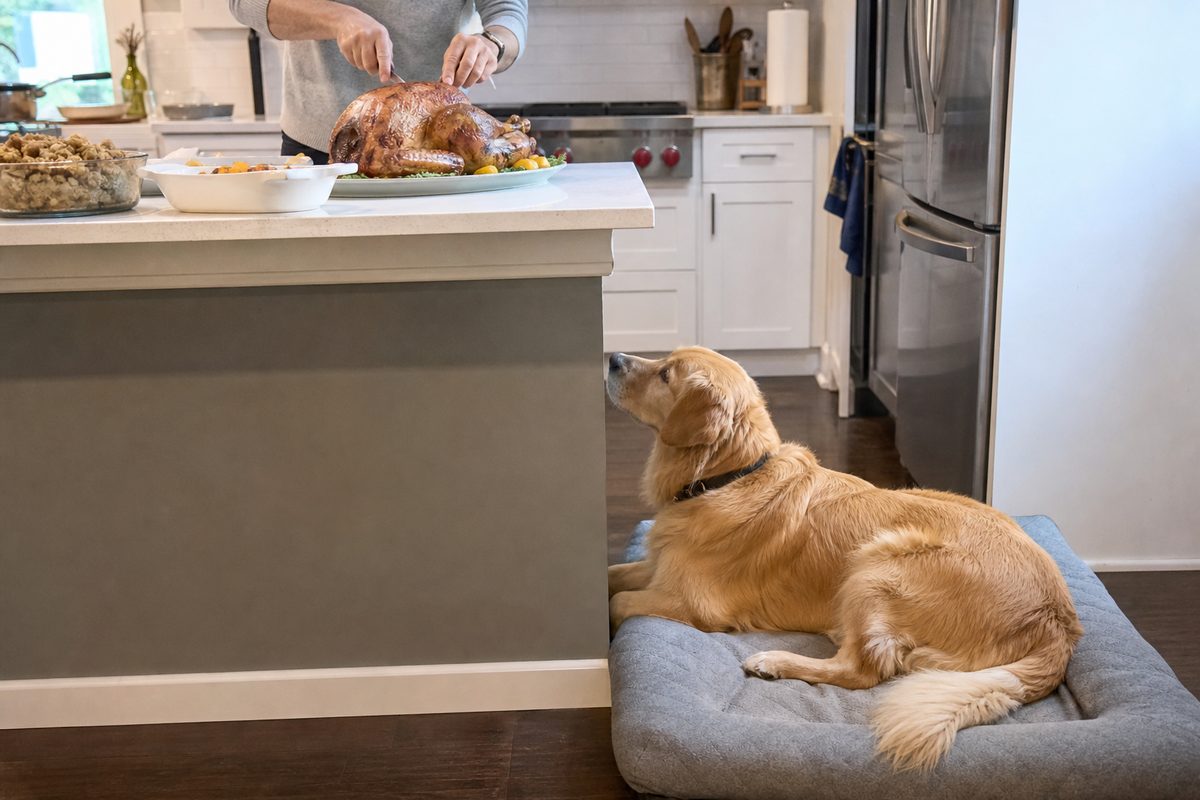
Your dog has probably been fine all week. Quiet house, normal routine, same two people coming and going. Then Thanksgiving arrives. The doorbell rings four times in ten minutes. Kids run in. Coats pile up. Something amazing is cooking in the kitchen. Your dog’s brain lights up like a Christmas tree.
This is not bad behavior in the way most people think of it. Dogs are social, curious animals, and a houseful of guests is the most stimulating thing that has happened to them in months. Without a practiced, reliable response to that chaos, they do what feels right: they rush the door, jump on everyone, bark, spin, and generally make the first ten minutes of your gathering a little miserable for all involved.
The good news is that the skills that solve this problem are teachable. And November, right now, is the best time to work on them.
What Skills Hold Up When Guests Walk In
There are three behaviors that change everything about how your dog handles a crowd.
Waiting Politely at the Door
The front door is where most of the chaos starts. A dog that has practiced waiting, and holding that wait while a stranger walks in, is a dog that gives you a window to manage the greeting. This takes real repetition. The dog has to learn to hold the behavior even when the excitement level goes up.
Polite Greetings Without Jumping
Jumping feels good to a dog. It gets attention, makes contact, and matches the energy of the moment. The fix is teaching the dog what to do with their feet instead, practiced over and over until the new response is the automatic one. For a deeper look at this, our post on how to stop your dog from jumping on people walks through the mechanics.
Place
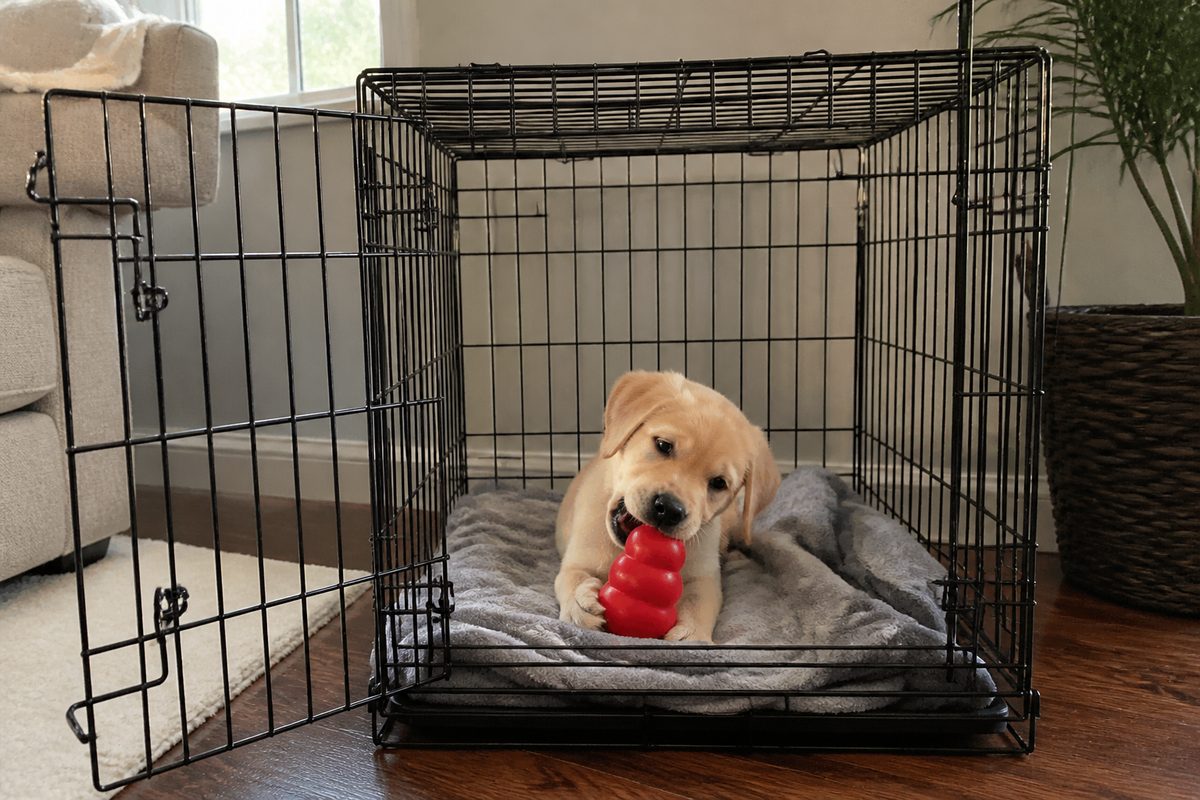
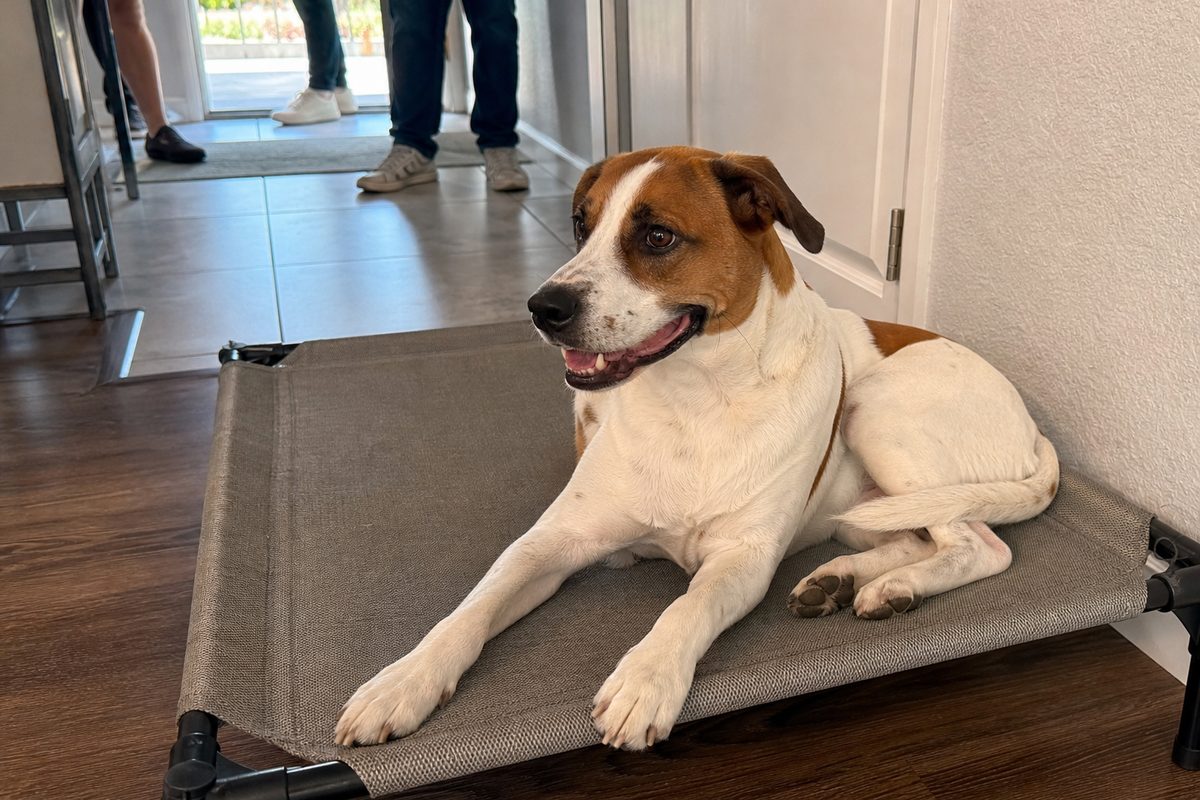
This is the skill we come back to more than any other for holiday situations. Place means your dog goes to a specific spot, like a crate or a place bed, and stays there until released. It gives your dog a job. It gives your guests some breathing room. And it gives you a way to manage the room without chasing anyone around the furniture.
When your dog knows a solid place command, you can send them to their spot the moment the doorbell rings and greet your guests without chaos. For more on why we love this skill so much, read our post on the place command. If you want a spot your dog will enjoy holding, the elevated place bed our trainers recommend for teaching place is available for pickup at our Overland Park academy or shipping within Kansas.
Why Home Practice Alone Is Hard to Pull Off
Here is what most owners run into. You work on sit and stay during the week when the house is calm, and your dog does great. Then Saturday comes, your neighbor stops by, and the dog loses every bit of that training the second the door opens.
That is not failure. That is just how dogs learn. A skill practiced in a quiet room has not been practiced in a stimulating room. The dog needs repetitions in the actual conditions where the behavior has to hold: distractions, new people, different energy levels. Most owners don’t have the setup or the time to create those conditions consistently, especially heading into the holiday season.
How KC Dawgz Helps with Calm Holiday Greetings
This is exactly what our Board & Train program is built for. Your dog comes to stay with us at our Overland Park or Gladstone location and trains with one of our trainers every single day. The program runs 2 to 6 weeks, and our approach is balanced training that starts with positive reinforcement. We would never hurt your dog.
Here is what the Obedience track covers, depending on how many weeks you choose:
2 weeks: Sit and place with an implied stay, loose-leash walking, polite greetings with people, no jumping, waiting at doors. These are the exact skills that fall apart when guests arrive.
3 weeks: Everything from 2 weeks, plus one command of your choice, like a solid recall or down with a stay.
4 weeks: Sit and place with distractions, loose-leash walking or heel, off-leash heel and recall, plus field trips to public places starting in week 3. By this point your dog has practiced these behaviors in genuinely busy environments, not just a quiet training room.
Throughout the stay, your dog also socializes with other dogs after passing a meet-and-greet evaluation, gets daily exercise, and settles into a consistent routine. That structure alone does a lot for a dog that tends to be wound up.
Working visits are usually on Fridays and run about an hour. You train alongside your dog and start learning the commands yourself. You can also book one 15-minute check-in visit each week, Monday through Thursday, to see how things are going.
On graduation day, you get a full Go-Home session, 60 minutes for a 2-week stay, 90 minutes for 3 weeks and up, where our trainers walk you through every command and show you how to keep the training sharp at home. Follow-up private lessons after graduation are matched to the length of your program so you don’t feel dropped off with a trained dog and no roadmap.
For more tips on managing the full holiday season once your dog is home, our post on helping your dog deal with visitors during the holidays is a great companion read.
The November Window
Kansas City Decembers fill up fast. There are company parties, school events, family travel, and before you know it your first big gathering is a week away. A dog that starts a 2 or 4 week Board & Train in early November comes home in late November or early December with the door manners, the place command, and the greeting skills already built in. You still have to practice at home, but the foundation is there before the rush begins.
Our trainers work with dogs starting at 4 months old, so this is not just for adult dogs with long-standing habits. Younger dogs pick up these skills fast and benefit enormously from the structure a Board & Train provides.
Every Board & Train family starts with a free evaluation where we meet your dog, talk through what you’re hoping for, and recommend the right program length. Schedule yours at kcdawgz.com/free-evaluation or call us at (913) 217-7288. The holidays are coming either way. Your dog might as well be ready for them.
Frequently Asked Questions
Why does my dog go crazy every time someone knocks or rings the doorbell?
The doorbell predicts excitement: new people, new smells, and a burst of energy walking through the door. Dogs that haven’t practiced a calm response will rehearse the frantic one until it becomes a habit.
What age does a dog need to be for Board & Train at KC Dawgz?
Dogs need to be at least 4 months old and current on Rabies, Distemper/Parvo, and Bordetella vaccines every 6 months.
Will my dog remember the training after the Board & Train ends?
Results depend on the dog and on consistent practice at home. The Go-Home session teaches owners the exact commands and how to keep them sharp, and follow-up private lessons are built into every program.