
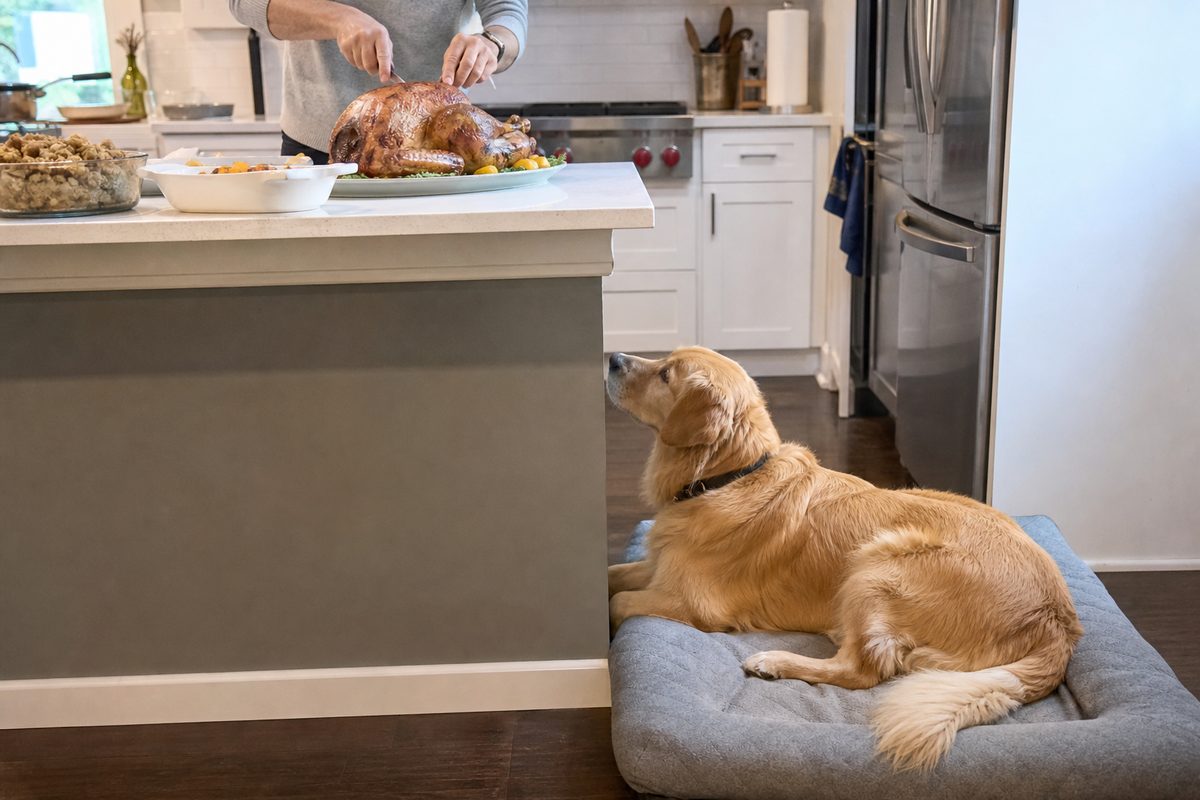
You turn around for ten seconds, and the stick of butter is gone. Dog counter surfing, when a dog puts its paws on the kitchen counter or table to grab food, is one of the most common habits Kansas City families ask us about. It also tends to get worse in late November, when holiday cooking puts more food on the counters and more people in the kitchen.
Counter surfing is a learned habit, and learned habits can change. Below is the plan our trainers use: stop the payoff, teach your dog what to do instead, and practice in a real kitchen.
Why Do Dogs Counter Surf?
Dogs are opportunists. If food is in reach and nobody is watching, most dogs will try for it at least once. The habit sticks when it pays off.
- It worked before. One stolen sandwich can keep a dog checking the counter for weeks. The reward was big and it came without warning, which makes the habit hard to drop.
- Height and reach. Large breeds and tall mixes can reach the back of a counter without jumping at all.
- Boredom. A dog with energy to burn goes looking for something to do, and the kitchen smells best. Our post on whether dogs get bored has ideas for using up that energy.
- Attention. Some dogs learn that grabbing a dish towel or a crust gets the whole family chasing them.
Key Takeaway: Every successful grab teaches your dog to try again. The first step is making sure the counter stops paying out.
How to Stop a Dog From Counter Surfing, Step by Step
1. Clear the Counters
For the next few weeks, assume your dog can reach everything on your counters, because it probably can. Push food to the back, put leftovers away right after meals, keep the trash behind a cabinet door and never leave a plate near the edge “just for a minute.” Each time your dog checks the counter and finds nothing, the habit gets weaker.
2. Manage the Kitchen When You Can’t Watch
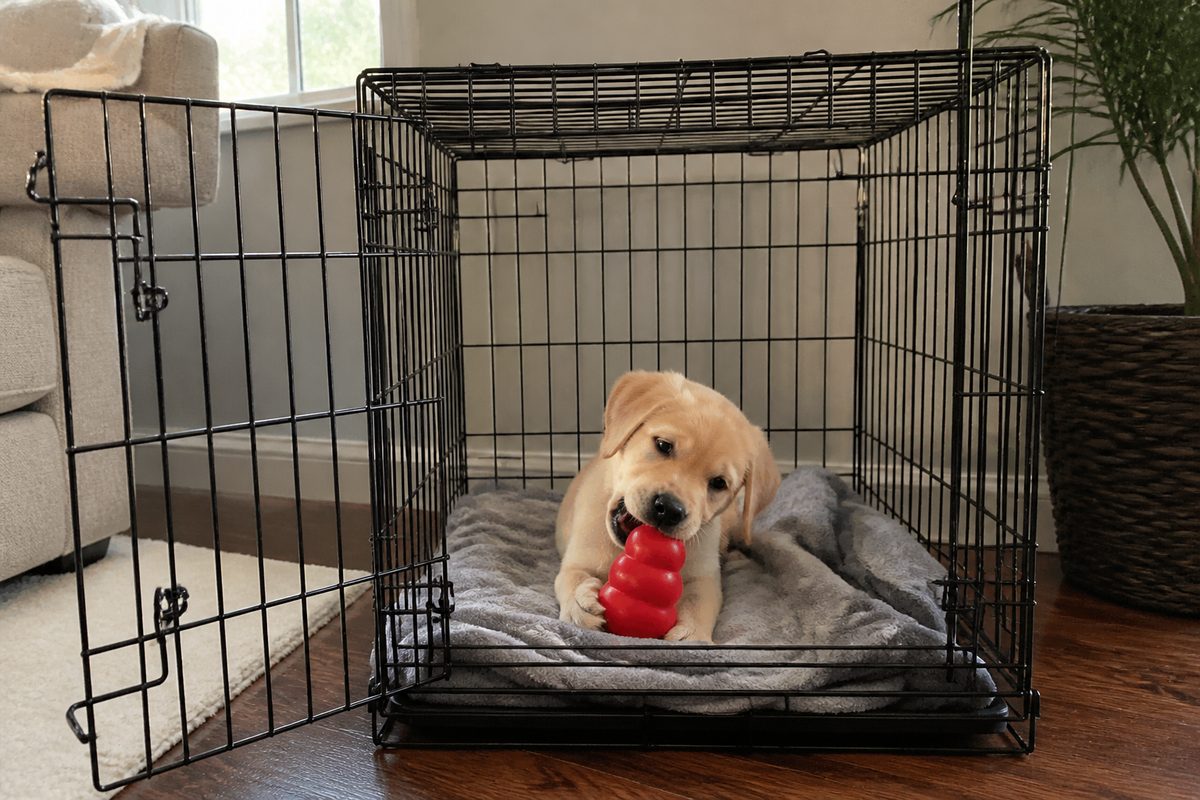
When you can’t keep an eye on your dog, keep your dog out of the kitchen. A baby gate across the doorway, a crate with a chew or a leash clipped to your belt all work. If your dog isn’t comfortable in a crate yet, our crate training guide walks through the first steps.
3. Teach Place
Place means “go to your bed and stay there until I release you.” It gives your dog a job while you cook. An elevated place bed works best: it’s a raised spot with clear edges your dog can feel, so “stay on it” is easy to understand. We sell the elevated place bed our trainers recommend, with pickup at our Overland Park academy or shipping anywhere in Kansas.
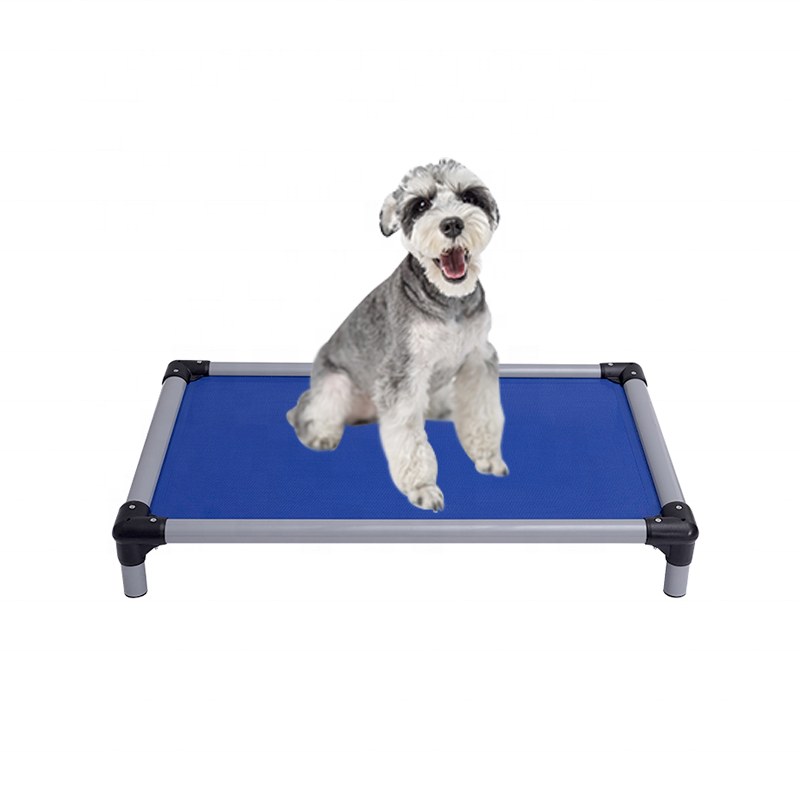
Set the bed at the edge of the kitchen, where your dog can see you but can’t reach the counter. Guide your dog onto it, reward and release with a word like “free.” Build up slowly: a few seconds, then a minute, then the time it takes to chop vegetables. Reward often at first while your dog is still on the bed. We wrote a whole post on the place command and why we love it.
4. Teach Leave It
Leave it tells your dog to turn away from something it wants. Start with a treat in your closed hand. When your dog stops sniffing and backs off, mark it with “yes” and reward from your other hand. Then practice with a treat on the floor under your shoe, then uncovered, then on a low table. Always reward with something better than what your dog left. If your dog already has something in its mouth, teaching it to trade items with you is a good next step.
5. Reward Four Paws on the Floor
Catch your dog doing it right. When your dog walks past the counter, sniffs and keeps all four paws on the floor, praise and toss a treat on the floor away from the counter. You want the floor to be where good things happen.
6. Interrupt Calmly, Then Redirect
If your dog’s paws go up while you’re in the room, say “off” in a calm, firm voice, guide your dog back to the floor and send it to place. Reward when it stays. Scolding after the food is already gone doesn’t help, because your dog connects it with you walking in, not with the grab a minute earlier.
Getting Ready for Thanksgiving
Holiday cooking is the hardest test for a counter surfer. In Kansas City that might mean a smoked turkey resting on the stove, a tray of burnt ends picked up on the way home and pies cooling by the window, all while guests come in and out. A few steps help:
- Plan the busiest hours. Give your dog a long chew or a stuffed food toy in its crate or behind a gate while the food is coming out.
- Assign a dog watcher. When your dog is loose in the kitchen, one person is in charge of it.
- Exercise first. A long walk or a game of fetch before guests arrive leaves less energy for snack hunting.
- Brief your guests. Ask them not to share food or leave plates on low tables.
Some holiday foods can make dogs very sick, including cooked turkey bones, fatty trimmings and drippings, onions, garlic, grapes, raisins, chocolate and anything sweetened with xylitol. If your dog also gets wound up when the doorbell rings, see our tips on helping your dog deal with holiday visitors.
Mistakes That Make Counter Surfing Worse
- Feeding from the counter. Tossing scraps while you cook teaches your dog that the kitchen is a buffet. The same goes for the dinner table, which we cover in our post on begging for food at the table.
- Different rules from different people. If one person lets the dog lick plates by the sink and another says no, your dog keeps trying.
- Only practicing when there’s no food around. Work on place and leave it during real cooking, starting with easy foods like raw vegetables.
How KC Dawgz Helps With Counter Surfing
Counter surfing is a manners problem, and our programs teach the skills that fix it. Every Day Training program teaches place with an implied stay, and our 3- and 4-week Day Train programs add leave it. Dogs live and train with us in Board & Train, where every program covers sit and place with a stay, and leave it is one of the extra commands you can choose in the 3- and 4-week programs. Dogs can start either program at 4 months old.
If you would rather work on it together, private lessons can focus on place, leave it and begging one-on-one. Puppies 3 to 6 months old learn place and leave it in Puppy 101, our group class at our Overland Park academy. See every option on our puppy training page.
Common Questions About Counter Surfing
Why Does My Dog Only Counter Surf When I Leave the Room?
Because that’s when it works. Your dog has learned that grabbing food while you’re watching gets interrupted, and grabbing it while you’re gone doesn’t. That’s why management matters as much as training. Until your dog has a solid place and leave it, the counter needs to be clear or your dog needs to be out of the kitchen when you step away.
Can an Older Dog Learn to Stop Counter Surfing?
Yes. Older dogs can learn new habits. It may take more repetition, because the old habit has had longer to pay off. Our post on training an older dog covers what to expect.
What Should I Do If My Dog Ate Something Off the Counter?
Stay calm and work out what your dog ate and how much. If it could be harmful, such as cooked bones, chocolate, grapes, onions or anything with xylitol, call your vet or the ASPCA Animal Poison Control Center right away. Don’t try to make your dog vomit unless a vet tells you to.
Get Help Before the Holidays
If your dog has already figured out the counter, you don’t have to fix it alone. Book a free evaluation, and a KC Dawgz trainer will look at what’s driving the habit and recommend the right program for your dog. You can also contact us with questions.