
Roughly one in three owners who call us opens with the same sentence: “My dog knows what I want and refuses to do it”. We hear it every week, and it is almost always wrong. In fifteen years of working with Kansas City dogs, our team has never met a truly stubborn one. We have met confused dogs, sore dogs, scared dogs, and badly underpaid dogs.
Learning how to train a stubborn dog starts with figuring out which of those you actually have. Once you name the real problem, the fix takes weeks instead of years.
Your Dog Is Probably Not Being Difficult
Before you change your training, rule out the four things that look like defiance but are not.
Pain or a Medical Issue
Sudden refusal of a behavior your dog used to offer freely is a red flag. Sore hips make sitting uncomfortable. Ear infections make recall unreliable. If your dog will do everything except one specific position, call your vet before you call a trainer.
Stress, Not Spite
A stressed dog moves in slow motion, licks its lips, turns its head away, or freezes. Owners read that as attitude. It is discomfort. Pushing harder makes it worse.
Adolescence
Between six and eighteen months, dogs forget everything they knew. This is the single most common reason our phone rings. It is developmental, it is temporary, and it responds well to structure. Owners who started with our puppy training classes tend to move through this stage faster because the foundation is already there.
The Behavior Was Never Truly Trained
If your dog only sits in the kitchen while you hold food, that is not a trained cue. That is a hand signal attached to a snack.
Pro Tip: Test it. Stand with your hands empty, say the cue once in a normal voice, and wait five seconds. If nothing happens, your dog does not know the word yet. That is a training gap, not a personality flaw.
Six Habits That Build a Stubborn Dog
Most of what owners call stubbornness, we can trace back to a handful of everyday habits.
Repeating Yourself
Saying “sit, sit, sit” teaches your dog that the first three sits are optional. Say it once. If nothing happens, make the situation easier instead of louder.
Training Only When You Need It
Dogs that are asked to perform only in emergencies never build reliability. Practice when you do not need the behavior.
The Rest of the List
- Never fading the food lure, so the treat becomes part of the cue
- Household inconsistency, where one person allows the couch and another does not
- Moving to hard environments before the easy ones are solid
- Ending sessions in frustration instead of on a win
Find Out What Your Dog Will Actually Work For
Better treats are not the whole answer. Payment has to match difficulty.
Build a Payment Ladder
Rank your dog’s rewards from lowest to highest value.
- Tier 1: dry kibble, for easy reps in a quiet room
- Tier 2: soft training treats, for new skills at home
- Tier 3: real meat, cheese, or hot dog, for the backyard and driveway
- Tier 4: tug, a thrown ball, or a chase game, for public distractions
Spend the Top Tier Where It Counts
Save Tier 4 for the hardest reps. Handing out your best reward for a living room sit leaves you with nothing when a squirrel shows up.
Access Is Currency Too
Doors, leashes, dinner bowls, and greetings are all paychecks. Most owners give them away free, then wonder why food stops working.
Need help sorting out what is really going on with your dog? Book a free evaluation with KC Dawgz or call. We have academies in Overland Park, Olathe, and Gladstone.
How to Train a Stubborn Dog in 30 Days
Here is the reset we run with clients. Sessions stay short, three to five minutes, two or three times a day.
Days 1 to 7: Reset the Cue
Retire the burned-out word and pick a new one. Work in the quietest room in your house. Reward the moment the behavior happens, not three seconds later. Your dog must succeed five times in a row before you change anything.
Days 8 to 14: Add One Variable
Raise duration, distance, or distraction. One at a time, never two together. Raising two at once is what makes owners feel like they are going backward.
Days 15 to 21: Change the Room
Dogs do not generalize. To your dog, a sit in the kitchen and a sit in the backyard are two separate words. Repeat the same easy reps in a new space and drop your criteria back down.
Days 22 to 30: Proof It in Public
Front door, then driveway, then sidewalk, then the quiet corner of a park. Bring Tier 4 rewards and keep sessions short.
Key Takeaway: Progress is measured in five correct reps in a row, not in how many minutes you trained. Track it. Owners who write down their reps see faster results than owners who guess.
Are Some Breeds Genuinely Harder?
Breed changes your strategy, not whether your dog is trainable.
Independent Thinkers
Huskies, beagles, and most terriers were bred to work away from human direction. They need higher-value payment and shorter sessions.
High Drive Working Dogs
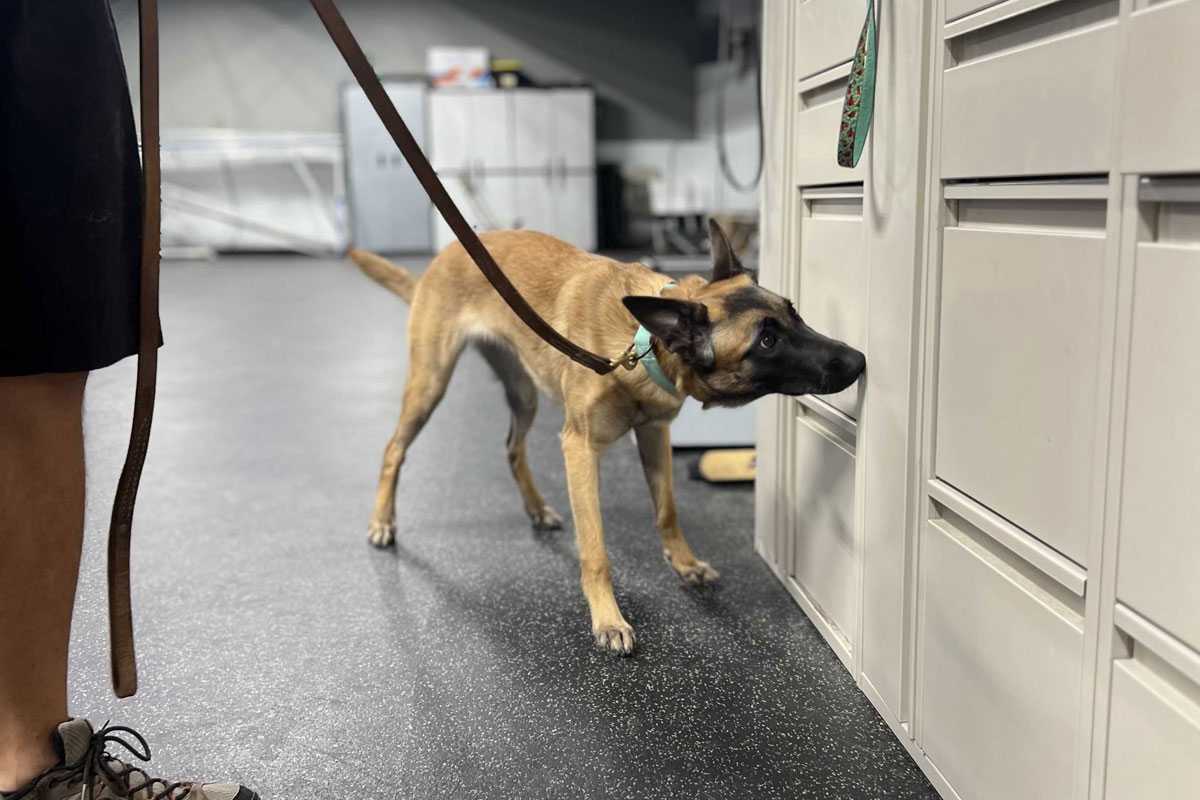
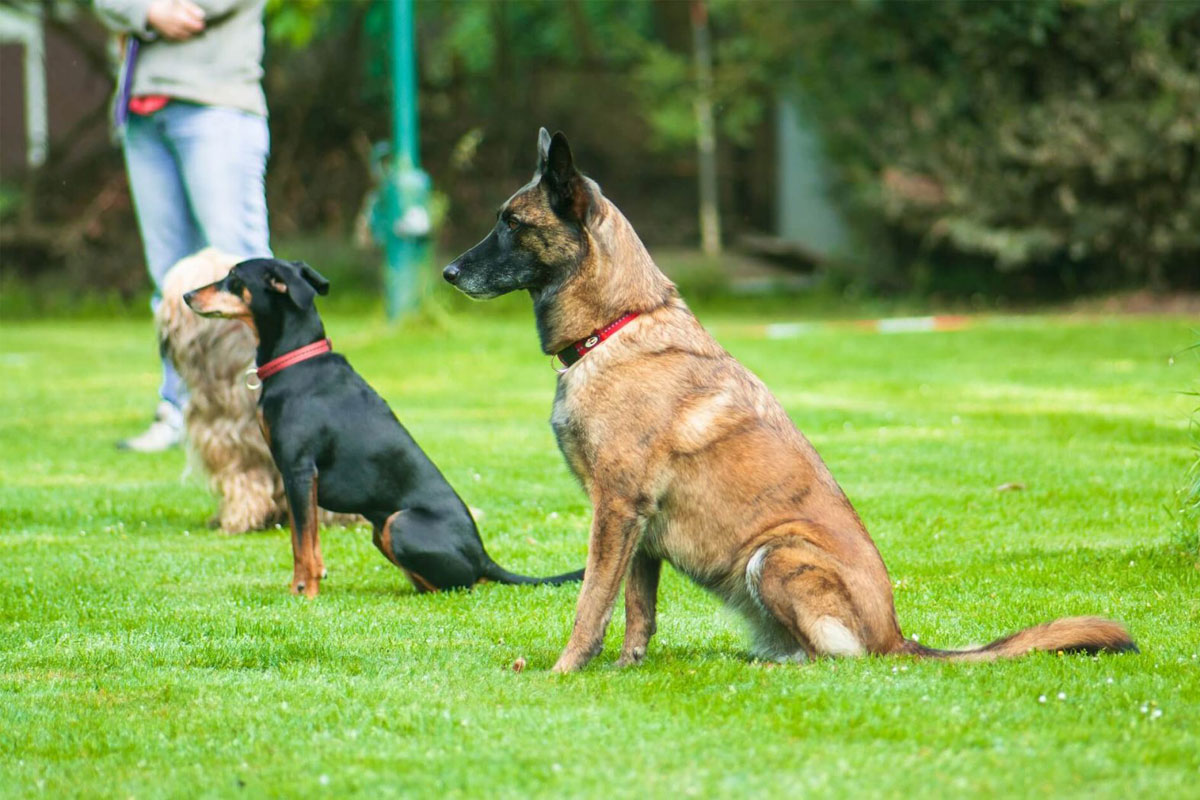
German Shepherds, Dobermans, and Malinois that look defiant are usually under-stimulated. Give the drive a job and the behavior problems shrink.
Doodles and Companion Breeds
Goldendoodles often get labeled stubborn when they are simply overexcited and under-practiced around people.
When to Bring In Our Team
Handle the basics yourself. Call a professional when you see any of the following.
- Growling, snapping, or guarding food, toys, or space
- Leash reactivity that is getting worse instead of leveling off
- Thirty consistent days with no measurable change
- You are starting to avoid your own dog
Our board and train program gives busy owners the fastest reset. Day training keeps your dog home at night. Private lessons put the handling skills in your hands, and group classes give you real distractions to practice against. For growling, guarding, or bite history, ask about behavior modification.
Every KC Dawgz program includes you, because the results have to work in your house, not just ours. You can read more about how we get there on our training philosophy page.
Schedule your free evaluation today and let our certified trainers show you how to train a stubborn dog the right way.